You don't need x-ray vision to know what plumbing your house runs on — the era it was built, plus five minutes with a flashlight at the water heater and under a sink, usually tells the story. Here's the field guide, and what each answer means for you.
Galvanized steel (common before the 1960s, lingering long after)
Gray metal pipe with threaded joints; a magnet sticks to it. Galvanized rusts from the INSIDE, narrowing for decades until the whole house shares a garden hose's worth of pressure. Rusty morning water and pressure that fades when two fixtures run are its signatures — we see it across Munford's and Bartlett's older streets. One failing section is usually a preview, not an exception.
Copper (roughly 1960s–2000s)
The penny-colored standard, joined with silvery soldered fittings. Mostly excellent and long-lived. Watchpoints: green-white crust at joints (slow weeping) and pinhole leaks in older soft copper. No panic — just worth eyes on it during any service visit.
Polybutylene (late 1970s–mid 1990s) — the one to actually check for
Usually gray flexible plastic (sometimes blue outdoors), often with metal crimp rings, stamped "PB" along the line. It had a well-documented habit of failing at fittings without warning, enough that some insurers still ask about it by name on applications. Plenty of Bartlett-era homes carried it. If you find PB, you don't have to panic — but you do want a plan, and your insurance paperwork wants accuracy.
PEX (2000s to today)
Flexible tubing in red, blue, or white, connected with crimp or expansion fittings. It's what we repipe INTO: freeze-tolerant flexing, fewer joints in walls, quiet. CPVC (cream-colored rigid plastic) shows up in some builds too and mostly minds its manners, though it gets brittle with age.
Where to look
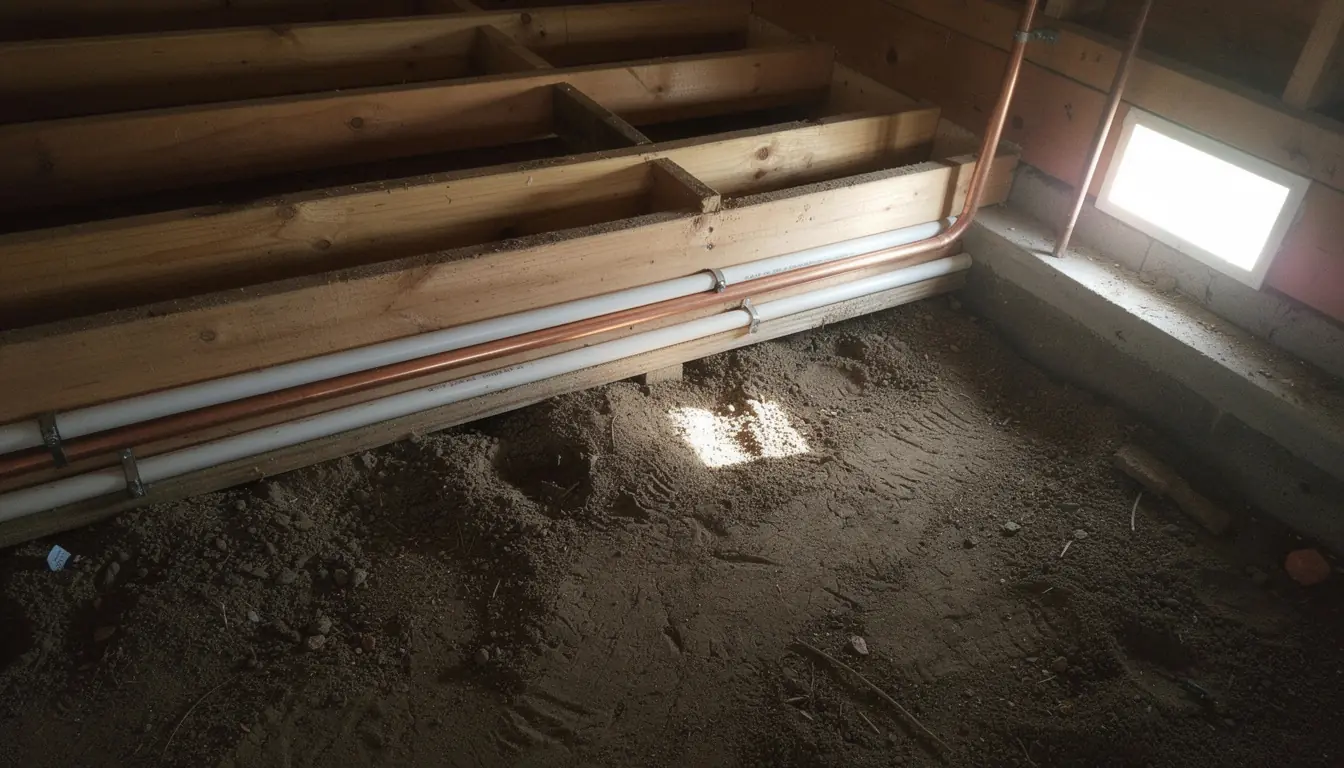
the connections on top of your water heater, under kitchen and bath sinks, and — if you're willing — along the crawlspace ceiling, where the whole system runs exposed.
Why it matters
pressure complaints, recurring small leaks, insurance and resale questions, and renovation planning all start with this one fact. If the flashlight tour raises questions — especially if you spot gray plastic or rusty threads — we'll give you the honest read on repair versus repipe, priced before anything starts: (901) 699-7763.