
Plumbing
Water Heater Replacement
The replacement side of the job — tank and tankless, sized to the household, installed to code, old unit hauled away.
 $150 OFF
Labor Day Water Heater Special
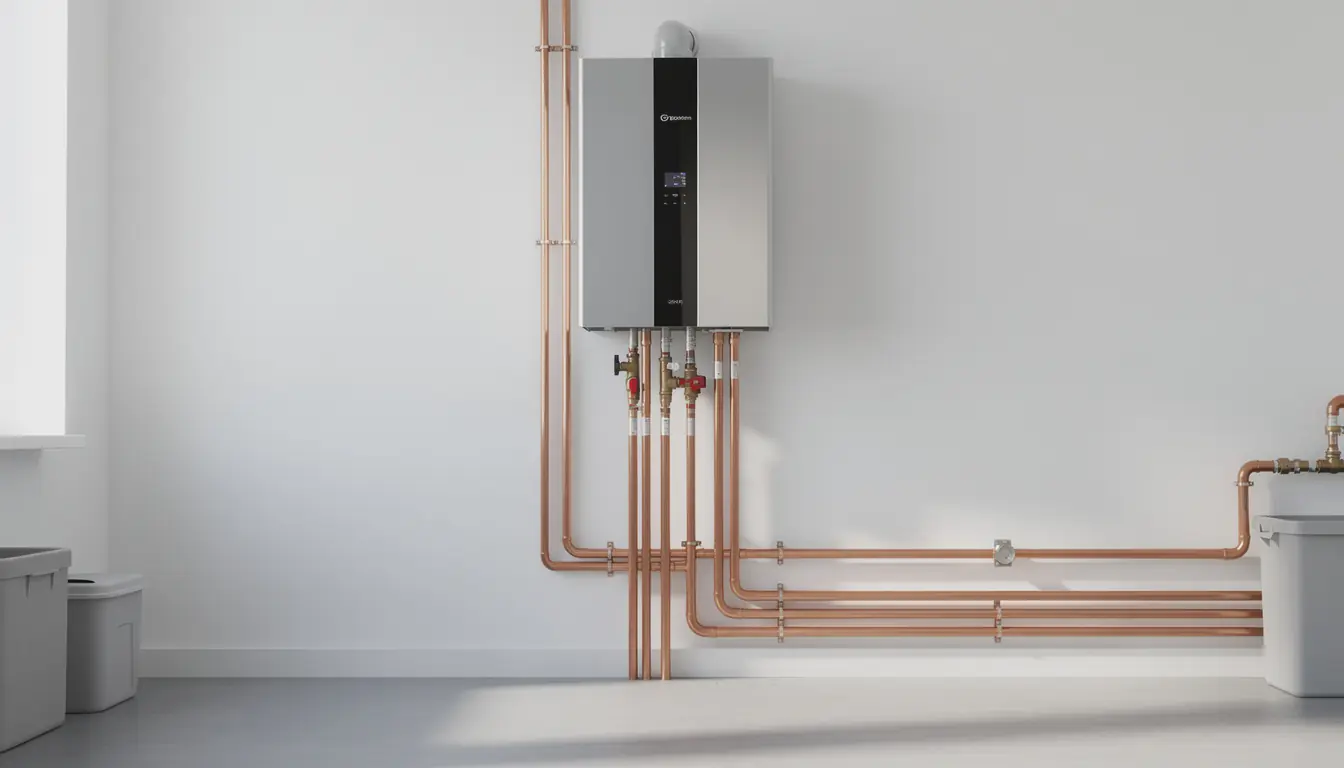
Tank or tankless, sized to how your family actually uses hot water — haul-away of the old unit included, most installs done the same week. Lock in the Labor Day price now.
Expires September 14, 2026 · Mention the Labor Day offer when scheduling. Not valid with other offers.
 FREE
FREEGenerac Install Quote & Sizing
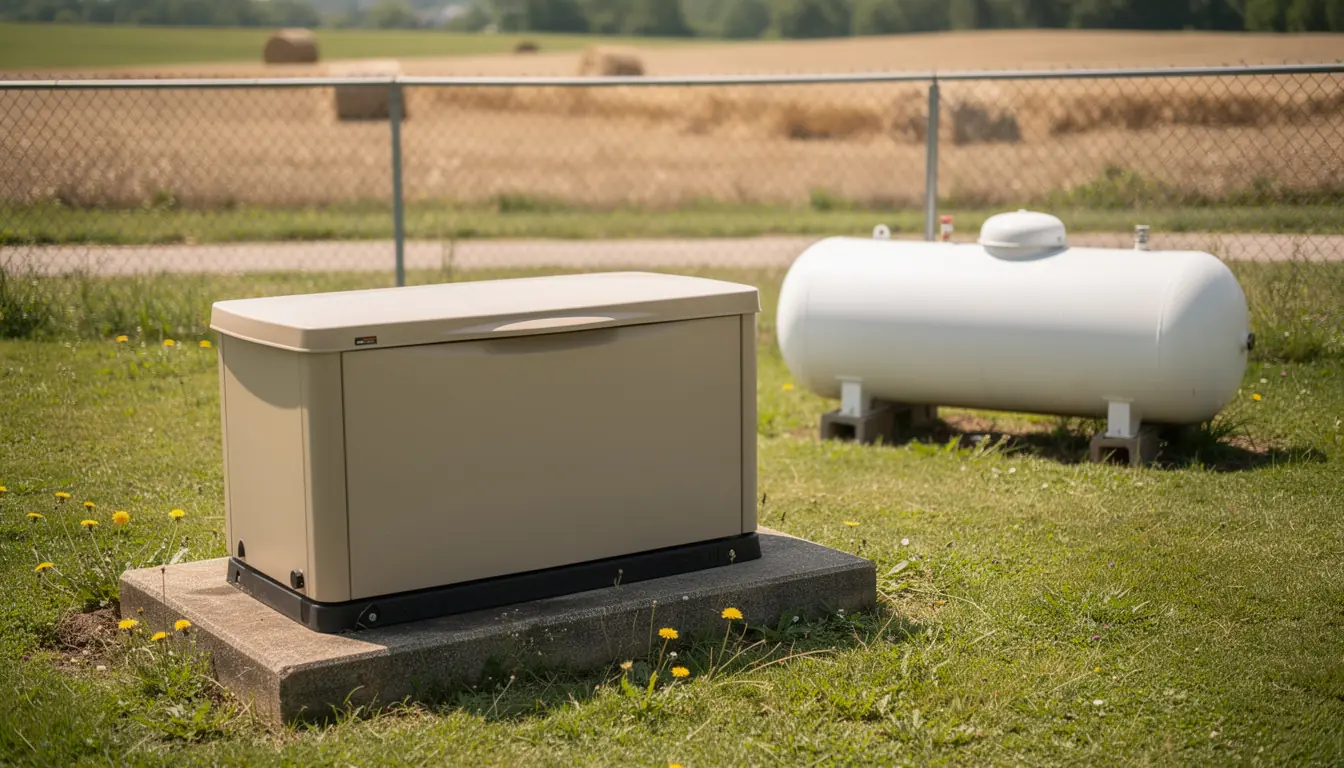
Standby power, installed by the crew that already holds the gas license — one company for sizing, pad, fuel line, and transfer-switch coordination. We size a Generac to your real loads and quote the full installed price before anything is ordered.
Ongoing — no expiration · The quote and sizing visit are free and carry no obligation — installation is priced per home and approved by you before work starts.
Repair and replacement are two different conversations, and it's worth knowing which one you're in before anyone quotes you. Our water heater page covers the repair side — elements, thermostats, pilot assemblies, gas valves, sediment flushes — and plenty of calls end right there, because a unit with real life left and one failed part is worth fixing. This page is the other half: when repair stops making sense, and what a replacement actually involves once that's decided. The rule we use is simple enough to hold us to. Under about eight years old with one thing wrong, repair it. Past ten, on its second repair in a short stretch, or leaking from the tank body itself, put the money toward the new unit. That last one is the only case with no repair answer at all — a shell that has rusted through doesn't get patched back into service, and the leak only grows from there.
The default on a replacement is to put back whatever was there, and that's usually right — but it's worth ten minutes of thought, because the day the old unit comes out is the cheapest day you'll ever have to change your mind. Sizing should follow how the household actually uses hot water: how many showers run back-to-back on a weekday morning, whether anyone fills a tub, whether laundry and a shower overlap. A tank that ran short three years ago will run short again. Fuel is normally settled by what the house already has rather than by preference — gas means venting, combustion air, and a line sized for the appliance; electric means adequate circuit and panel capacity. Changing fuel type is a project, not a swap, and that's better known going in than met partway through. Whether tankless is right for you is a longer conversation, and our tank-vs-tankless guide walks through it honestly, including the households where the answer is no.
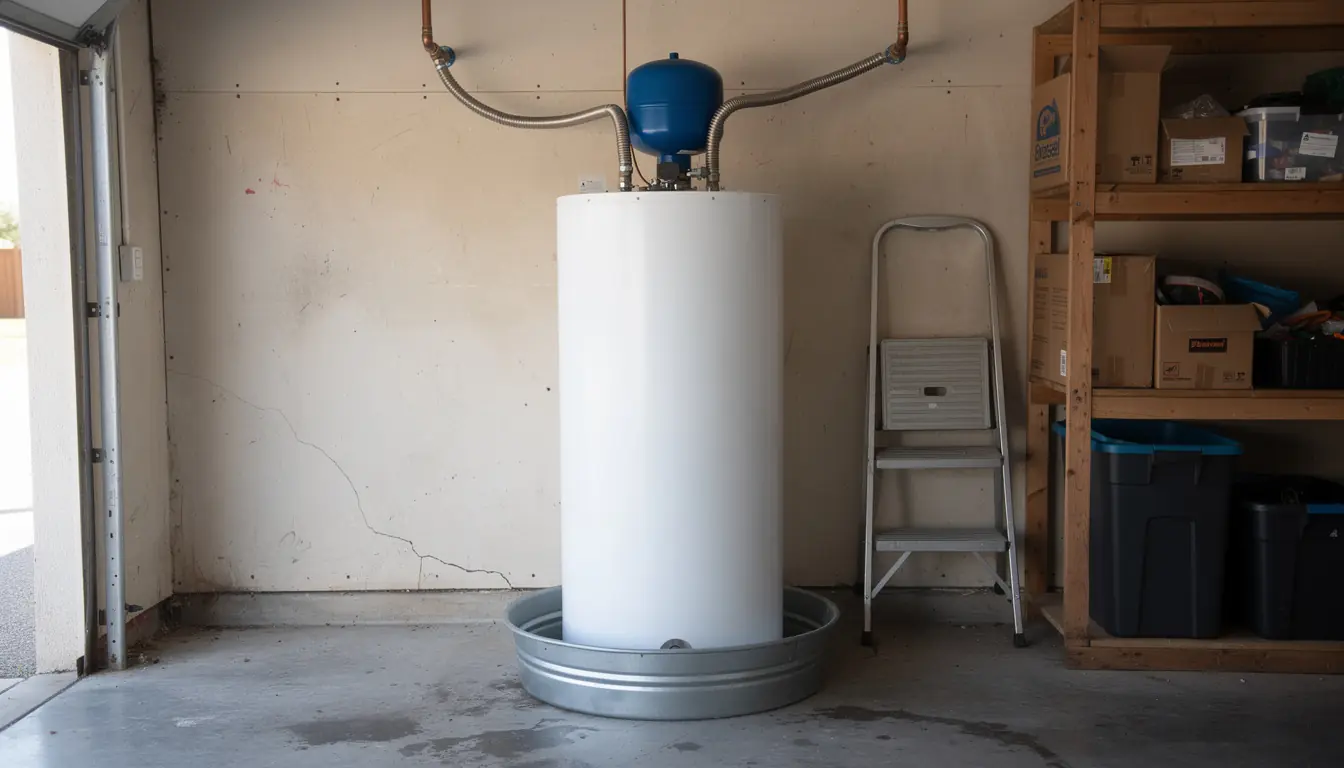
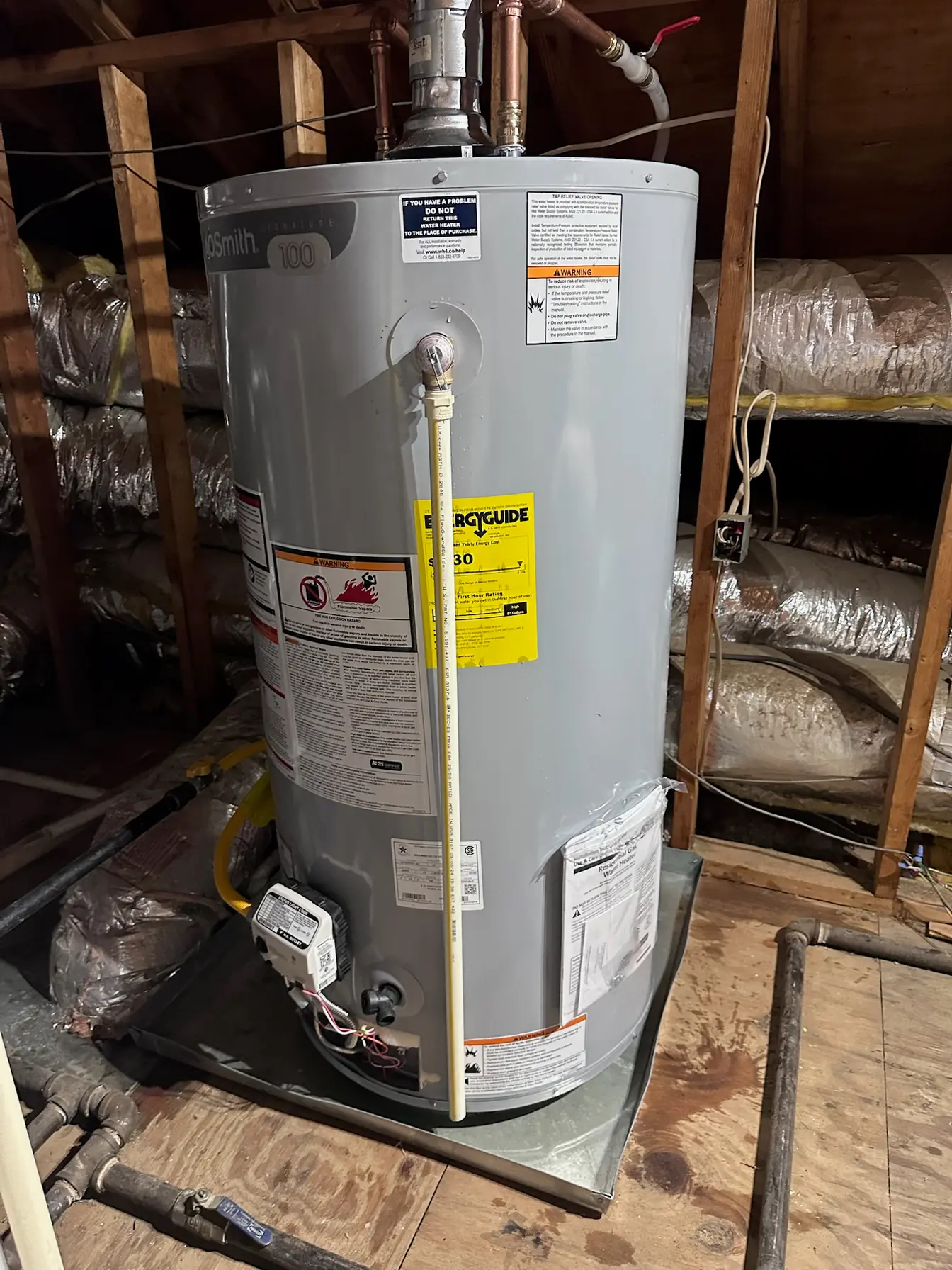
Replacement day is mostly logistics, and access varies most. Getting the old unit out of a garage is straightforward; getting it out of an attic, a crawlspace, or a closet framed decades ago before tanks got thicker insulation is a different morning's work, and it's worth mentioning when you call. Then the new unit goes in with the parts that make it safe and legal rather than merely connected: a drain pan where one is required, a correctly routed temperature-and-pressure discharge line, proper venting and combustion air on a gas unit, a sediment trap and correct connections on the gas side, and a thermal expansion tank where the house is on a closed system. Those are the difference between an honest quote and a cheap one, and they're the same items most often missing on the install we're taking out. Where the local jurisdiction requires a permit and inspection, that's part of the job too. Our West Tennessee cost guide covers what moves the number; what doesn't move is that you get the full installed price before we start.
At a glance
Like-for-like tank replacement
Same fuel, same location, same general size — the most common version of this job and usually the right one. What changes is that the new install comes up to current code, which frequently means adding the drain pan, the correct discharge line, or the thermal expansion tank the original never had.
Resize while it's out
The only cheap moment to fix a capacity problem is when the old unit is already on the dolly. If your household has been running out of hot water on ordinary weekday mornings for years, say so before we order anything. It runs the other way too: an oversized tank in a two-person house is money spent reheating water nobody uses.
Tankless conversion
A real conversion rather than a swap. The gas line often has to be upsized, because a burst of on-demand heating draws far more gas than a tank's slow burn; the venting is different; and there's condensate to deal with. In exchange: hot water that doesn't run out, a wall instead of a floor footprint, and a unit that commonly outlives two tanks — provided it gets its annual descaling flush, which our water makes non-optional.
Replace it before it picks the date
A tank past ten years sitting in a garage with a floor drain is a different risk than the same tank in an attic, a closet, or over a finished ceiling. Where the location is unforgiving, replacing on your schedule beats replacing on the tank's — and it's the one version of this job that doesn't start at six in the morning with the water shut off and everyone standing around.
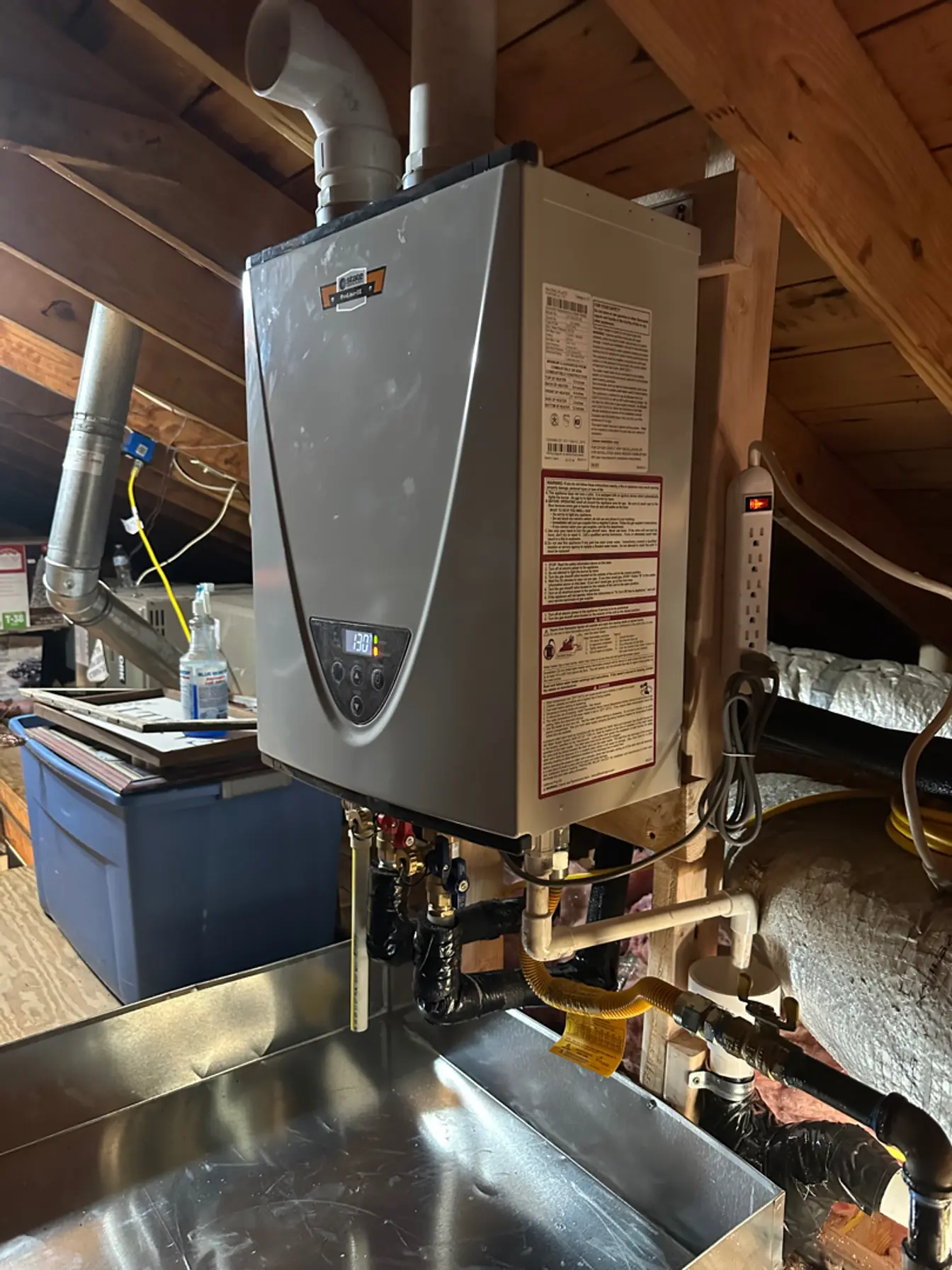
Watch for these signs
Quick answers
How do you decide whether to replace instead of repair?
Age first, then what failed. A bad thermostat, element, or pilot assembly on a unit that's only a few years old is worth repairing, and we'll say so even though the replacement is the bigger job for us. Past the ten-year mark, on a second repair in a short stretch, or leaking from the tank body itself, the honest answer is replacement — and that last one is the case with no repair to consider at all, because the steel has corroded through. We look at the actual unit before saying which one you've got.
Do I need to go tankless, or is a tank still fine?
A tank is fine for most houses, and we'll tell you so rather than talk you up. Tankless earns its extra cost in a specific set of households: ones running out of hot water regularly, staying in the house long enough for the longer service life to pay back, and willing to keep up the annual descaling flush our water makes necessary. Smaller household, tighter budget, or a house you may sell before long — a good tank is the smarter spend. We install and service both, so there's nothing in it for us either way.
How long does a replacement take, and how long am I without hot water?
A like-for-like swap is usually a single visit, and most of the variation in that day is access rather than the unit itself — a garage install and an attic install aren't the same job. In the ordinary case hot water is back the same day, and the only wait at the end is the recovery cycle once the new unit is filled. A fuel change, a relocation, or a tankless conversion runs longer, because the gas, venting, or electrical work is the actual project and the water heater is almost incidental to it. We'll tell you which of those yours is when we quote it, not after the old one is out.
Will a new water heater last longer than the one I'm replacing?
Not by itself — West Tennessee's moderately hard water will treat a new tank exactly the way it treated the old one. Minerals fall out of solution when water is heated and settle as sediment on the bottom of the tank, sitting on a gas burner or burying an electric element, so the heater ends up working through a growing rock layer. What genuinely extends service life is draining some water out of it once a year, which matters even more on well water. Tankless units get the same chore in a different form: an annual descaling flush of the heat exchanger, which we do, and which is what keeps a tankless unit's efficiency argument intact. Our hard-water guide covers the homeowner version of both.
Related
More plumbing services
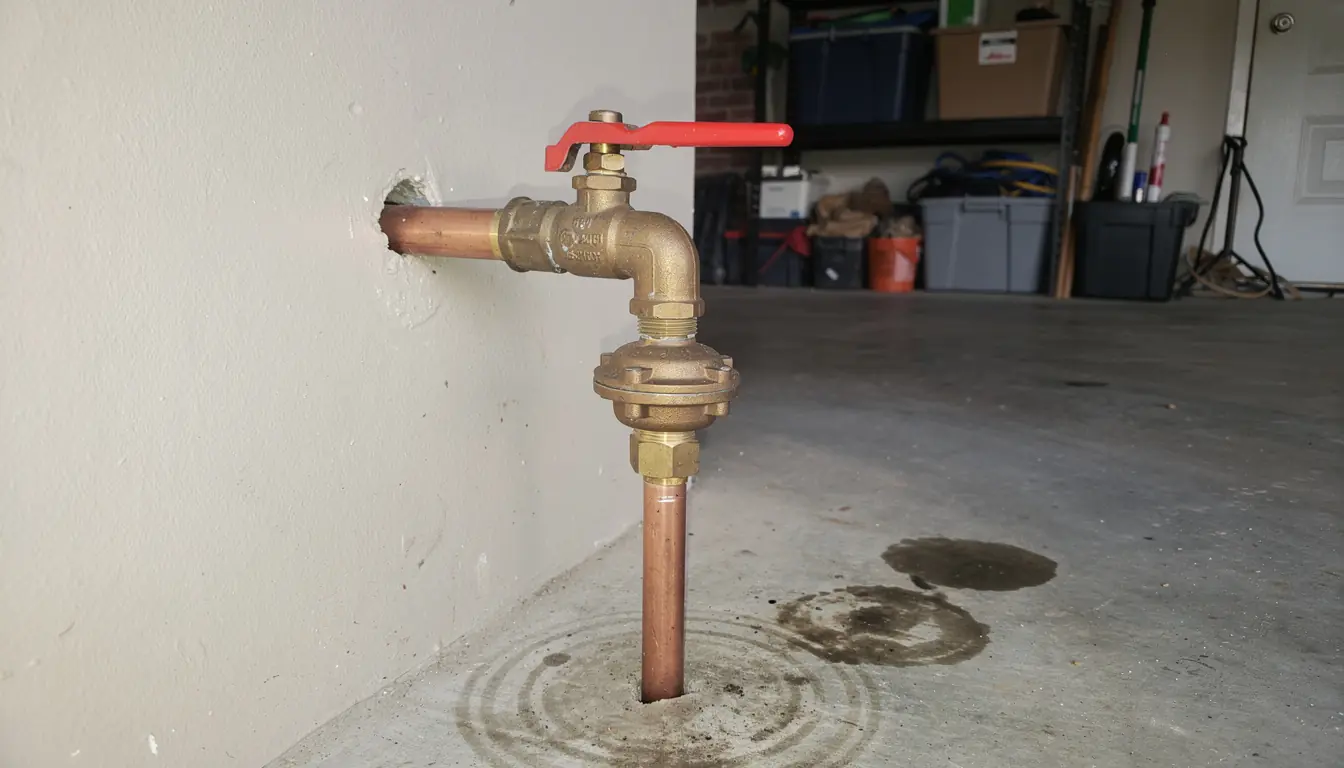
Emergency Plumbing
Burst pipe? Sewage backup? No water? A licensed plumber is on call right now.
Learn more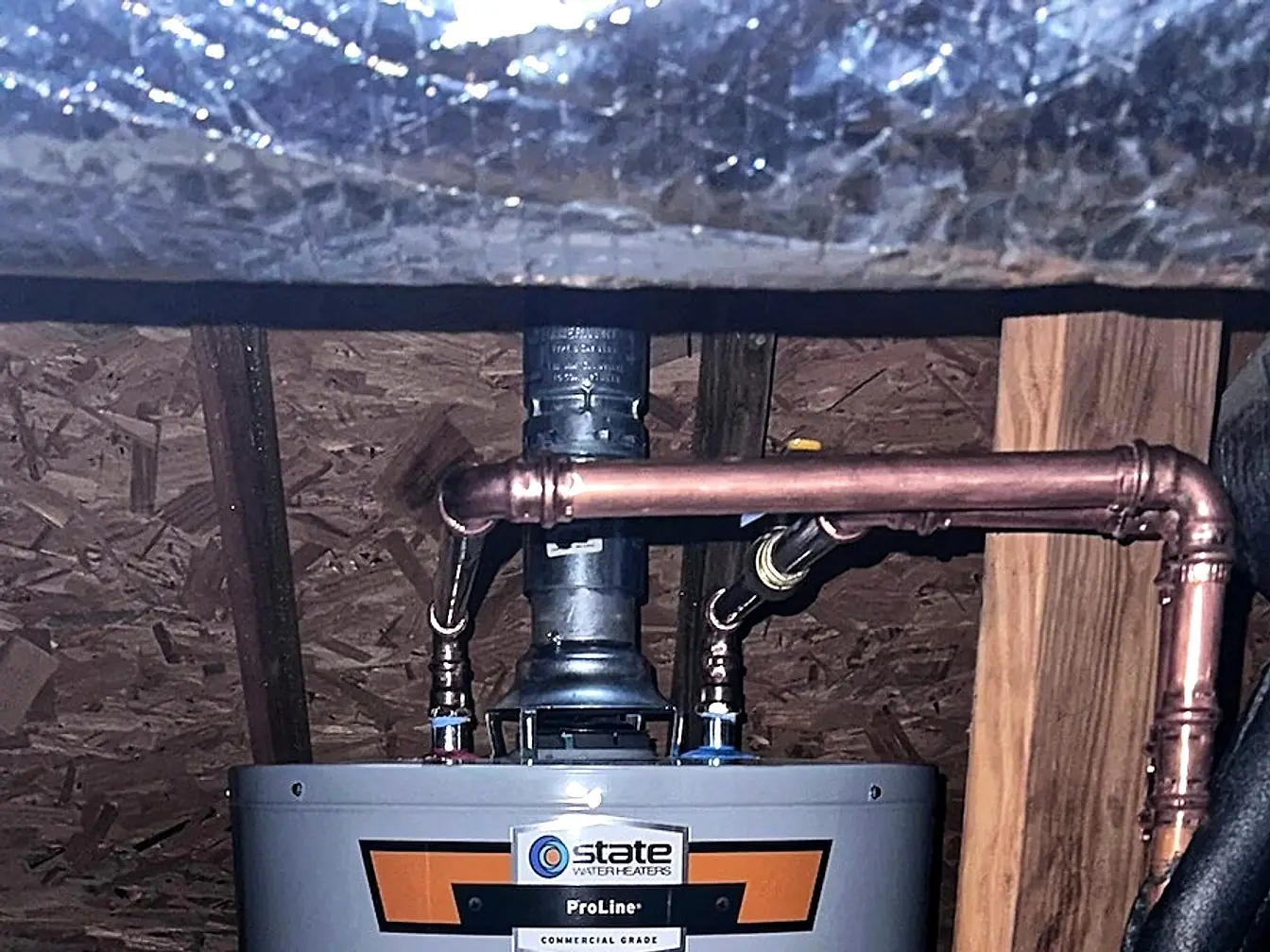
Water Heater Service
Repair, replacement, tank and tankless — same-week installs, upfront pricing.
Learn more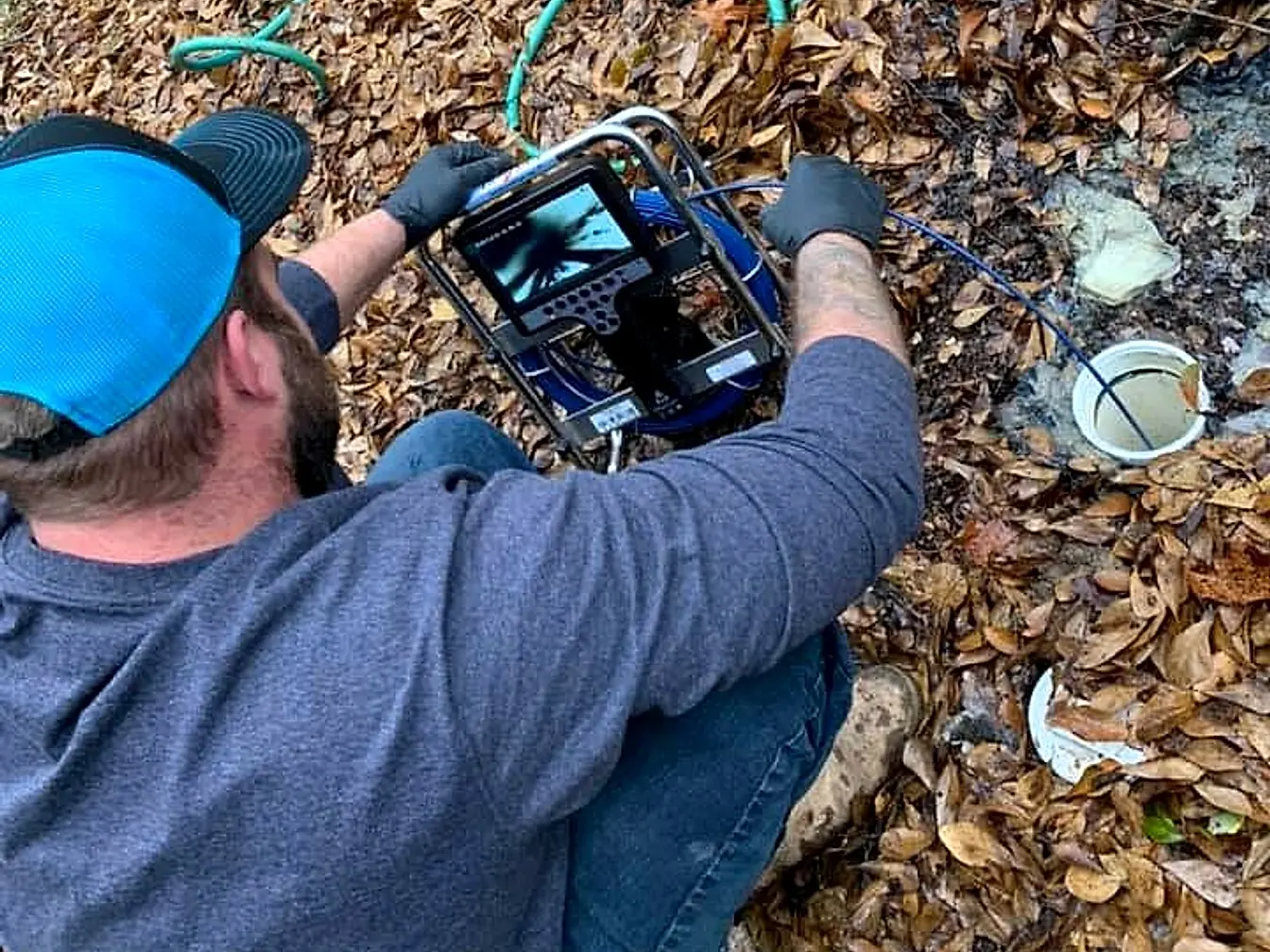
Drain & Sewer
Slow drains, main line clogs, camera inspections — cleared and verified.
Learn more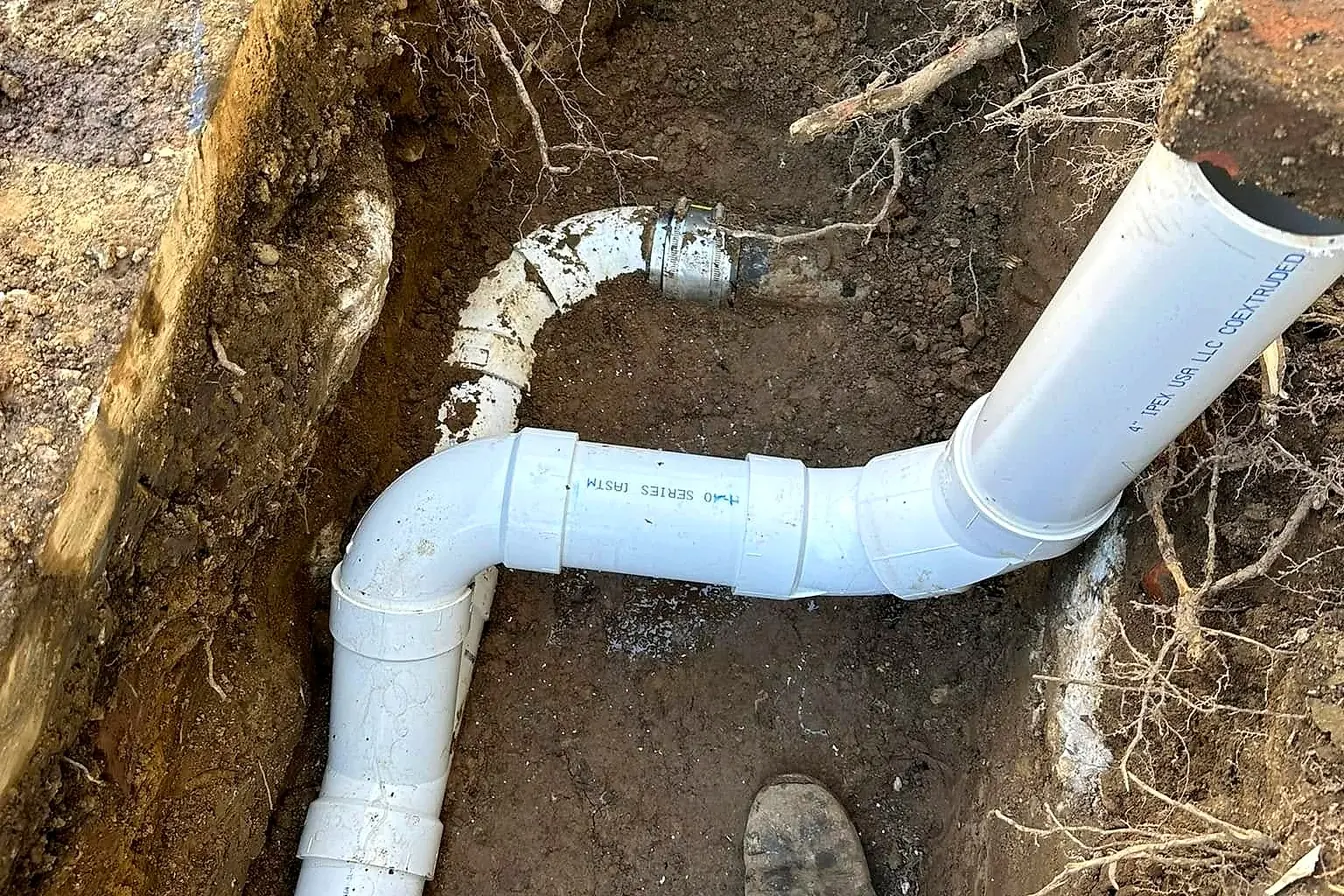
Pipe Repair & Repiping
Freeze damage, slab leaks, aging galvanized lines — repaired or replaced right.
Learn more
Septic Services
We install and repair septic systems across Tipton County — and do our own excavation. Diagnosis first, price before work.
Learn more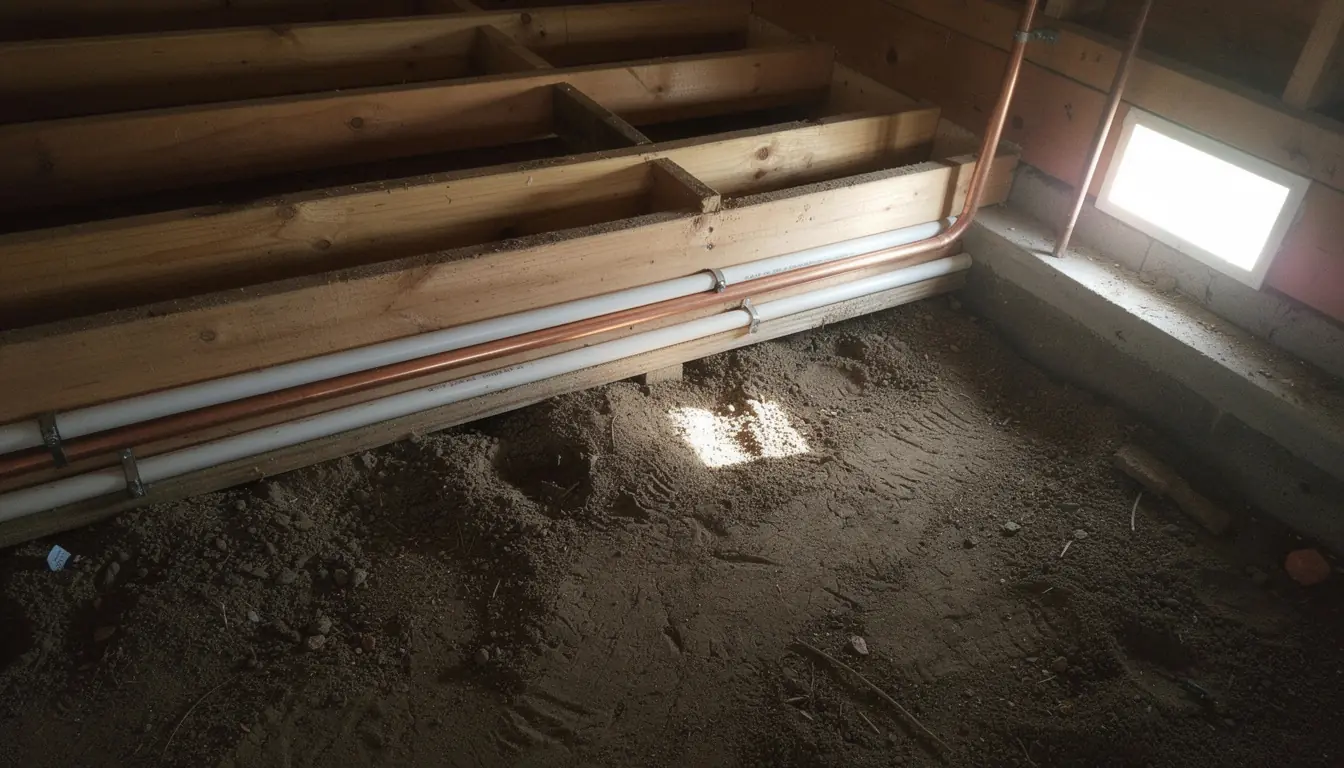
Sewer Services
Sewer line repair, replacement, and cleanout installs — we locate the actual defect before anyone digs up the yard.
Learn moreNeed a hand? We answer 24/7.
Upfront pricing · Licensed local techs · If it's not right, we make it right