Parts of our service area — Millington's low pockets especially — sit where heavy spring rain has nowhere better to be than your crawlspace or basement. For those homes, the sump pump isn't an accessory; it's the one machine standing between a loud storm and a wet, moldy, expensive mess. It deserves five minutes of your attention a few times a year.
How it works, in one breath
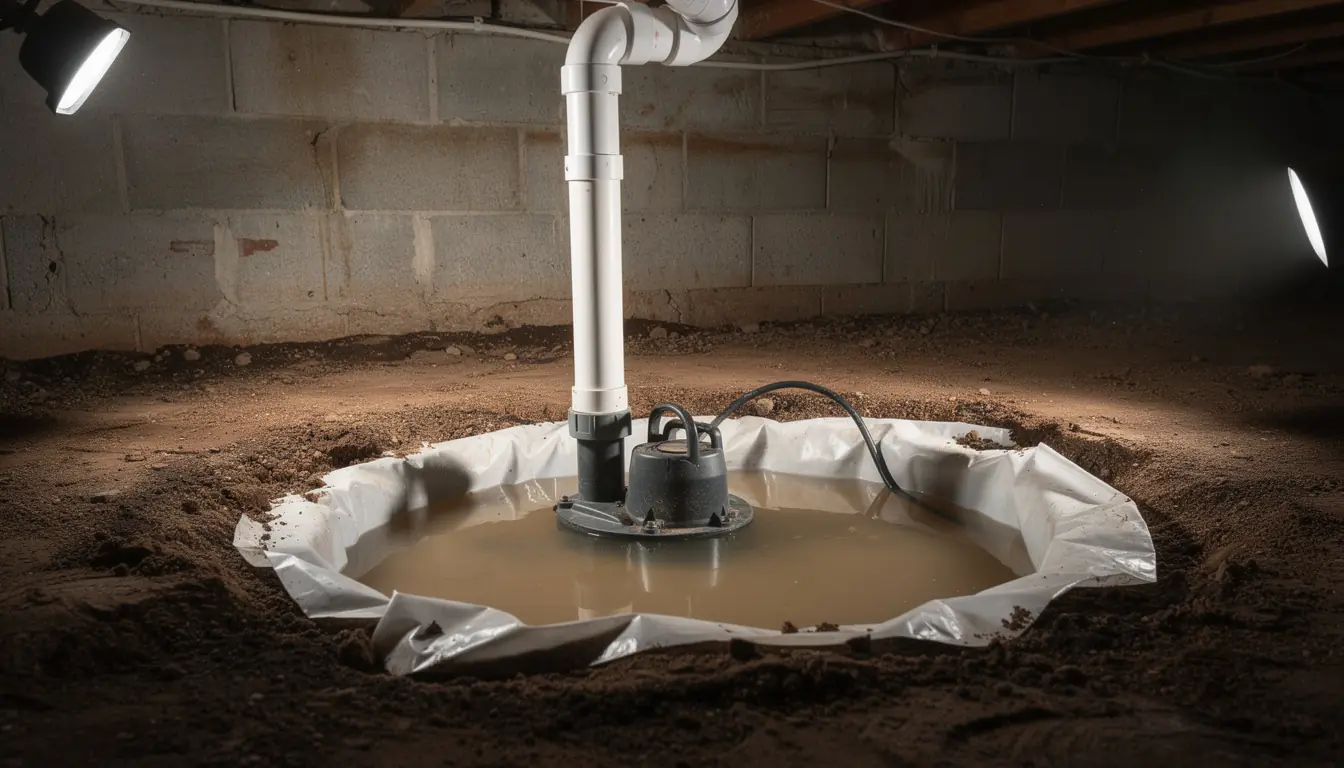
water collects in a pit at your foundation's low point; a float rises with it; the float trips the pump; the pump pushes water out a discharge pipe away from the house. Simple — which means the failures are simple too: a stuck float, a dead pump, a clogged pit, or no power.
The quarterly test (do it before storm season, not during)
pour a bucket of water into the pit until the float rises. The pump should kick on promptly, drain the pit, and shut off without drama. If it hesitates, rattles hard, runs on after the water's gone, or short-cycles on and off — it's telling you something while the sun is still out.
The check valve matters more than it looks
That one-way valve on the discharge line keeps pumped water from falling straight back into the pit. When it fails, the pump re-pumps the same water over and over — running constantly, wearing itself toward an early grave.
Where the water goes counts
Discharge should land well away from the foundation and never into a sewer line. Water dumped beside the house just takes the scenic route back to the pit.
The hard truth about power
the storms that flood your pit are the same storms that knock out electricity. A pump with no power is a bucket. A battery-backup unit — or a water-powered backup on municipal pressure — is what actually protects the house during the storm you bought the pump for. If your area floods and you don't have backup, that's the single most worthwhile upgrade on this page.
End of life sounds like
constant running, grinding or rattling, tripped breakers, rust flakes in the pit, or simply age — these don't retire gracefully. If yours is acting tired, have it checked before the radar turns green and yellow. We're at (901) 699-7763.