The garbage disposal might be the most misunderstood machine in the house. It's not a shredder and it's definitely not a second trash can — it's a grinder for small, soft food scraps, full stop. Used that way, it lasts for years. Used the other way, we meet its owner every Thanksgiving weekend.
The absolute no list
Grease and oils — liquid going in, drain-coating paste as it cools, the single biggest cause of kitchen line clogs we clear. Potato peels and starchy scraps — they grind into a glue that settles in the trap. Coffee grounds — they feel harmless and compact into sludge. Fibrous stuff (celery, corn husks, onion skins) — the strings wrap the impellers. Rice and pasta — they keep swelling in the pipe long after you've walked away. Eggshells are argued about on the internet; we've cleared enough membrane-and-grit clogs to put them on the no list too.
The yes list is short
small soft scraps rinsed off plates, citrus (great for smell), ice cubes now and then to knock grime off the grind ring. That's honestly about it.
Run cold water — before, during, and after
Cold keeps any fat solid enough to chop and flush; hot melts it into the paste problem. Let the water run a good ten seconds after the grinding sound clears to carry everything through the trap.
The humming jam — a two-minute fix
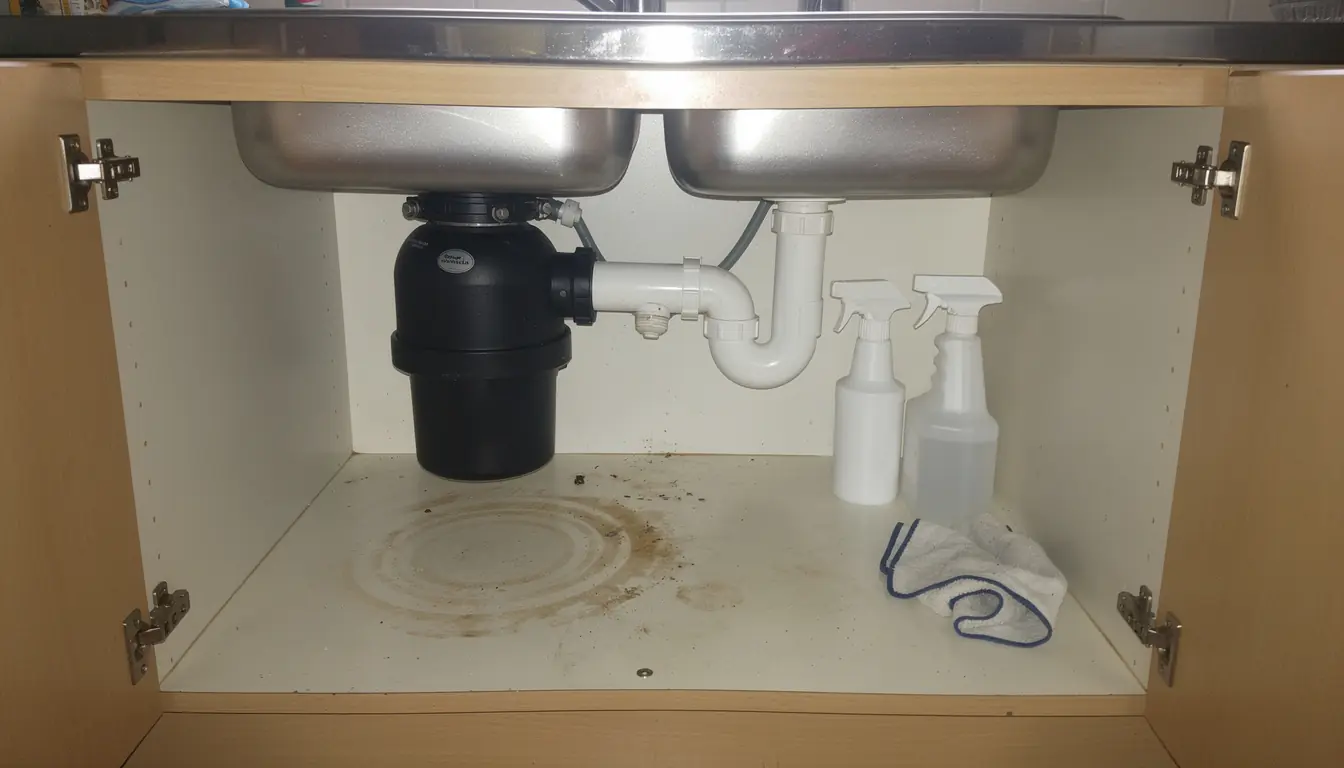
Hum with no spin means something's wedged. Kill the switch (better: the breaker). Under the sink, most disposals have a hex socket in the center of the bottom — an allen key worked back and forth frees the jam. Fish the object out with tongs — never a hand — then press the red reset button on the bottom and try again.
When it's telling you it's done
water dripping from the unit's body (not a loose connection — the body itself) means internal seals are gone, and that's replacement, not repair. Frequent trips of the reset, or grinding that's gotten weak and slow on a decade-old unit, usually point the same way. Swaps are quick, and we'll quote it upfront: (901) 699-7763.